
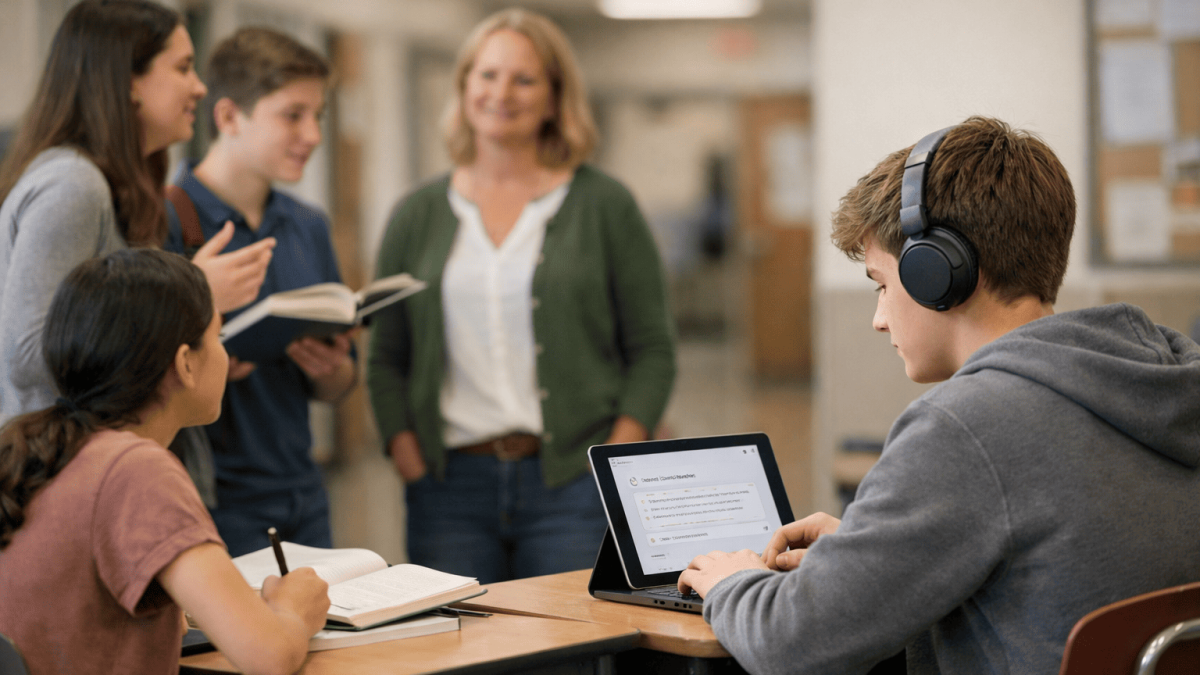
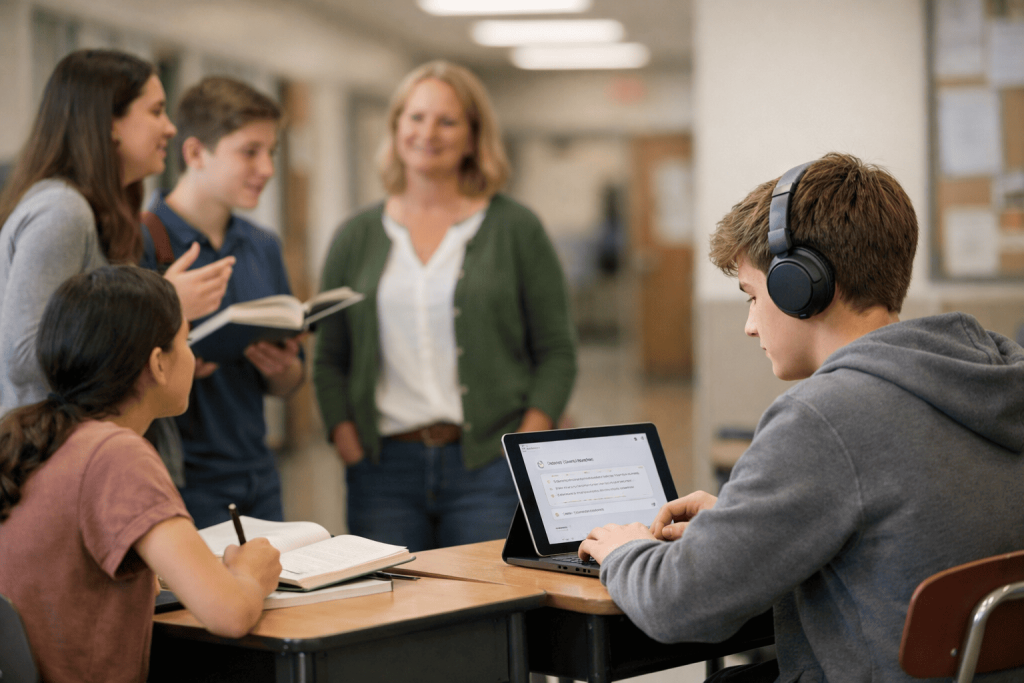
Teachers vs AI: Why the Combination of Human Educators and Artificial Intelligence Is the Future of Student Learning
Can AI Replace Teachers? The Answer Is More Nuanced Than You Think
The debate around teachers vs AI has intensified in 2026. As artificial intelligence continues to reshape every industry, education stands at a crossroads. Can AI replace teachers? Should it? The growing body of evidence points to a clear answer: the future of education isn’t about choosing one over the other — it’s about combining the strengths of both human teachers and AI to create the best possible learning experience for students.
The Rise of AI in Education

AI in education is no longer a futuristic concept — it’s happening now. The global AI in education market is projected to grow from $5.18 billion in 2024 to a staggering $112.3 billion by 2034. From AI-assisted learning tools to personalized learning platforms, technology is transforming how students absorb, process, and retain information.
Today, 60% of teachers are already using AI in their classrooms to handle routine tasks like grading multiple-choice assessments, tracking student progress, and generating practice exercises. But the real story isn’t about automation — it’s about augmentation.
What AI Does Best
AI excels in areas that require processing vast amounts of data, providing consistent feedback at scale, and adapting in real time. Here’s where AI-assisted learning truly shines:
- Personalized Learning Paths: AI systems analyze student performance patterns, identify learning gaps, and automatically adjust difficulty levels. Companies like Squirrel AI have improved student question accuracy rates from 78% to 93% through personalized learning paths, currently serving over 24 million students.
- Instant Feedback: Unlike traditional classroom settings where students may wait days for graded assignments, AI provides immediate feedback, allowing learners to correct mistakes and reinforce understanding in real time.
- Data-Driven Insights: AI-powered platforms like Carnegie Learning’s MATHia analyze not just whether students get the right answer, but how they think through each problem, offering insights that would be nearly impossible to gather manually at scale.
- Scalability: AI personalized learning tools can simultaneously serve thousands of students, each on their own adaptive path — something no single human teacher could do.
What Human Teachers Do That AI Cannot
Despite AI’s impressive capabilities, human teachers bring something irreplaceable to the classroom: emotional intelligence, mentorship, and the ability to inspire.
- Reading the Room: Teachers read subtle social cues that signal student engagement, confusion, frustration, or excitement. They adjust their approach on the fly — not based on data points, but on human intuition and empathy.
- Understanding Context: A teacher understands that a student’s declining performance might be linked to personal circumstances at home, not a gap in knowledge. AI sees patterns; teachers see people.
- Mentorship and Role Modeling: Teachers serve as mentors and role models, fostering social-emotional development, critical thinking, and the kind of intellectual curiosity that no algorithm can replicate.
- Facilitating Collaboration: Group discussions, debates, project-based learning, and peer collaboration thrive under the guidance of a skilled educator. These interactions build communication skills, teamwork, and creativity.
The Best of Both Worlds: Balancing Human Teachers and AI in Education
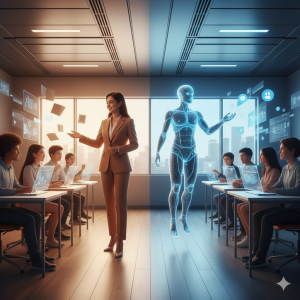
The most compelling evidence in 2026 shows that the combination of human teachers and AI produces the best student outcomes. An AIPRM report found a 62% increase in test scores among students using AI-powered instruction systems — but these gains were most significant when AI was paired with active teacher involvement.
Here’s what the ideal teacher-AI collaboration looks like:
1. AI Handles the Heavy Lifting
AI takes on lesson frameworks, learning objectives, content generation, and activity variations — reducing teacher planning time by 50–70% while improving quality and consistency.
2. Teachers Focus on What Matters Most
With administrative tasks offloaded to AI, teachers have more time for what they do best: guiding students, facilitating meaningful discussions, providing emotional support, and fostering critical thinking. 69% of teachers report that AI tools have improved their teaching methods, and 55% say it has given them more time to interact directly with students.
3. AI Augments Personalization
AI systems continuously analyze student responses, identify learning gaps, and adapt content difficulty in real time. Meanwhile, teachers interpret these insights within the context of each student’s unique situation and needs.
4. Teachers Ensure Ethical and Critical AI Use
Teachers play a crucial role in guiding students to use AI tools with critical awareness, helping learners interpret AI-generated content, question sources, and develop the digital literacy skills they’ll need throughout their lives.
The Challenges We Must Address
The path to effective AI-teacher collaboration isn’t without obstacles:
- Critical Thinking Concerns: 70% of teachers worry that AI weakens students’ critical thinking and research skills. This makes the teacher’s role as a critical thinking facilitator even more important.
- Human Connection: Over half of students report that using AI in class makes them feel less connected to their teachers. Striking the right balance is essential.
- Training Gap: Under half of teachers and students have received any training or guidance on AI in education from their institutions. Investment in professional development is critical.
- Equity and Access: Not all schools and students have equal access to AI-powered tools, risking a widening of the educational divide.
Looking Ahead: The Teacher-First AI Approach
The most successful AI deployments in education in 2026 follow a teacher-first approach. This model recognizes educators as the primary agents of change, with AI serving as a powerful tool in their hands — not a replacement.
AI tutoring is expanding not by replacing teachers, but by offering quick, focused bursts of practice and feedback that relieve overwhelmed educators and give students support when they need it most. Student learning gains correlate more strongly with the quality of instructional leadership and teacher support than with which AI product a school selects.
Conclusion
The teachers vs AI debate presents a false dichotomy. The evidence is overwhelming: neither human teachers alone nor AI alone can deliver the optimal learning experience. It’s the thoughtful combination of both — leveraging AI’s analytical power and scalability alongside the irreplaceable human elements of empathy, mentorship, and inspiration — that truly transforms education.
As we move forward, the question isn’t whether AI will play a role in education. It already does. The real question is how well we equip our teachers to harness it, how thoughtfully we integrate it into our classrooms, and how committed we are to ensuring that every student benefits from the best of both worlds.
The future of learning is human + AI. And it starts with empowering teachers.